
Whoa! I opened a raw Solana transaction once and felt like I’d landed in the middle of a codebase with no map. Really? Yes. At first glance the raw JSON is dense, full of base58 signatures, inner instructions, and program IDs that mean nothing to a casual glance. My instinct said “this is overcomplicated,” and honestly, somethin’ about that buried memo field bugs me. But hang on—if you pause, breathe, and learn the small set of data points that actually matter, the chaos starts to make sense.
Here’s the thing. Transactions on Solana are fundamentally just lists of instructions executed by programs, and each instruction touches accounts in a predictable way. Medium-level reading will get you far: look for signatures, status, block time, fee, pre/post balances, and token transfers. Longer dives — when you want to debug a failed swap or track down a lost NFT — require inspecting inner instructions and logs, which reveal the program-level steps that happened behind the scenes.
How to approach a transaction (quick checklist)
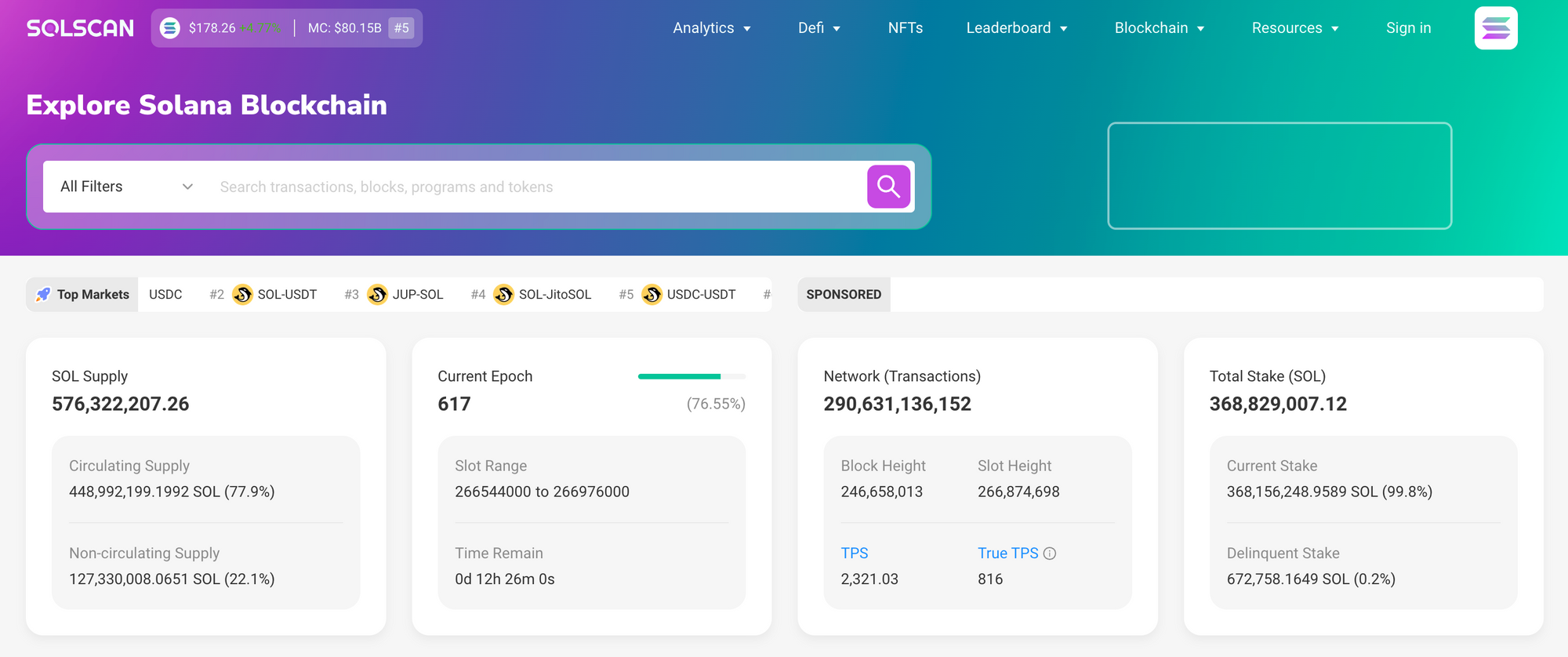
Start small. Find the transaction signature. Copy it. Paste it into a blockchain explorer search box and hit enter. Simple. If you’re using an explorer like the solscan explorer official site, you get a human-friendly layout: status, time, fee, and decoded token movements up front. Wow! That alone answers the common questions: did it succeed, who paid the fee, what tokens moved, and between which accounts.
Now dig a little. Look at pre and post balances for SOL to see how fees and lamport transfers affected accounts. Then scan token balances before and after to confirm token movements. If the transaction is a swap or a complex DeFi interaction, check the inner instructions and the logs — they often tell you the exact program calls and any CPI (cross-program invocation) behavior. Hmm… those logs are gold when you’re troubleshooting.
Some technical specifics matter. A successful transaction will have a “Confirmed” or “Finalized” status and at least one signature verified by validators. The transaction object contains a “message” with accountKeys and instructions arrays. Each instruction references a program ID; common ones you’ll see are the System Program, the SPL Token Program, and various DEX/program IDs. Initially I thought program IDs were just opaque hashes, but then I realized they map to recognizable programs if you keep a cheat-sheet or use the explorer’s decoded names.
Here’s an example mental model: instructions are verbs; accounts are nouns. The System Program’s transfer instruction says “move lamports from A to B.” The Token Program’s transfer does the same for SPL tokens but updates token accounts instead of SOL balances. When a swap occurs, multiple instructions ripple out — approve, transfer, invoke the AMM, and settle — and those show up as an ordered sequence in the transaction log. On one hand it looks linear, though actually many operations are nested through CPIs which are only obvious in the inner instructions section.
Common traps and what each field really tells you
Fee surprises. People forget that some wallets add extra compute/bandwidth or prioritization fees; as a result the fee line might be larger than you expected. Also, if a transaction failed, the pre balances may still have decreased because of rent or partial consumption of fees — this part can be annoying, and yes, I’ve cursed at it. Seriously?
Program errors. A failed status with an “InstructionError” helps pinpoint the failing program and instruction index. Read the logs—often you’ll see “custom program error” codes and a human-readable trace that the devs left in place. Initially I assumed an error code required a deep dive into source code, but many popular programs have well-documented error mappings and the explorer will sometimes decode them for you.
Token decimals and amounts. Don’t read raw integer amounts without considering decimals. A token transfer might show “1000000” but with 6 decimals that’s actually 1.0 token. Always check the token’s metadata or the explorer’s displayed units. Double words like “very very” matter when discussing significance—tiny dust transfers are very very common and usually harmless.
Account ownership and rent. Every account has an owner program. If you see an account owned by the Token Program, expect token-account semantics. Rent-exempt thresholds matter too: an account below rent-exempt might be reclaimed later, which is something to keep in mind when you see small balances lingering.
Solscan tips I use daily
Okay, so check this out—Solscan offers some niceties that speed up investigation: decoded instruction labels, visual token flow, wallet activity history, and analytics dashboards for tokens and holders. I use that when watching for big movements or unusual NFT transfers. Sometimes I just want to watch a whale move funds—Solscan filters and holder trackers make that easier. (oh, and by the way… the UI isn’t perfect, but it’s fast.)
Pro tip: use the “Related Transactions” and program links. If a transaction invokes a program that then creates sub-transactions, Solscan often links those for quick traversal. If you’re debugging a failed DeFi action, following that chain saves time. My instinct said “grab the signature and ask someone,” but these links let you answer most questions yourself.
Another trick is to check for memos. Memos are optional small text fields that sometimes include human-readable notes like trade IDs or off-chain references. They’re helpful for matching on-chain events to off-chain systems. I’m biased, but I prefer explorers that surface memos clearly.
FAQ
Q: How do I know if a SOL transaction failed because of insufficient funds or a program error?
A: Check status and logs. If the error is “insufficient funds,” pre balance checks show a shortfall before the last instruction. If it’s a program error, the logs and InstructionError point to the instruction index and usually the failing program. Sometimes both happen: for example, an approval step could fail due to insufficient token allowance, which looks different from raw SOL shortfall.
Q: Can I recover funds from a failed transaction?
A: Generally no. Fees are consumed even on failed transactions. Token movements only commit if the instruction sequence completes as intended. If something was unintentionally transferred, you might negotiate a return with the counterparty, but on-chain recovery requires their cooperation or a program-level rollback which is rare. I’m not 100% sure about every edge case, but that’s the practical reality I live with.

Customer Reviews
Thanks for submitting your comment!